
Species introduction: Chameleons
Chameleons are famous for their ability to change colour. However, only some people know exactly how and why they do so. Additionally, few are aware of the other amazing adaptations chameleons have developed to survive in the wild.
Scientists and conservationists have been fascinated by the chameleon - a member of the lizard family - for centuries. Furthermore, they have been mystified by the reptile’s ability to change colour for almost as long. However, in recent decades studies have revealed many of chameleons’ biological secrets. And the more that comes to light about the complexity of these animals, the more fascinating they become.
Unfortunately, their popularity has also contributed to their demise. Of over 200 chameleon species identified worldwide, the IUCN considers almost 40% threatened. While deforestation and habitat change are the biggest threats to chameleons’ existence, illegal wildlife trafficking also plays a significant part.
Fact Sheet: Chameleon
- Common name: Chameleon
- Scientific name: Chamaeleonidae
- Characteristics: Ability to change colour; long, sticky projectile tongues, tails that curl around tree branches to assist with balance.
- Size: 1.27 centimetres to 67 centimetres
- Weight: An average chameleon weighs roughly 130 grams (females) to 180 grams (males). However, this does not apply to very small or large species.
- Life span: 4 months to 9 years, depending on the species.
- Origin: Madagascar, sub-Saharan Africa
- Habitat: Warmer habitats such as rainforests and deserts
- Diet: Preys on insects, worms; larger species occasionally eat rodents or small birds.
- Social behaviour: Typically solitary unless mating.
- Threats to survival: Habitat loss and modification, deforestation, illegal wildlife trade.
- Endangerment status: The IUCN considers 37% of chameleon species threatened. Furthermore, they classify 11 species as Critically Endangered. This category is just one away from Extinct in the Wild, after which it becomes extinct.
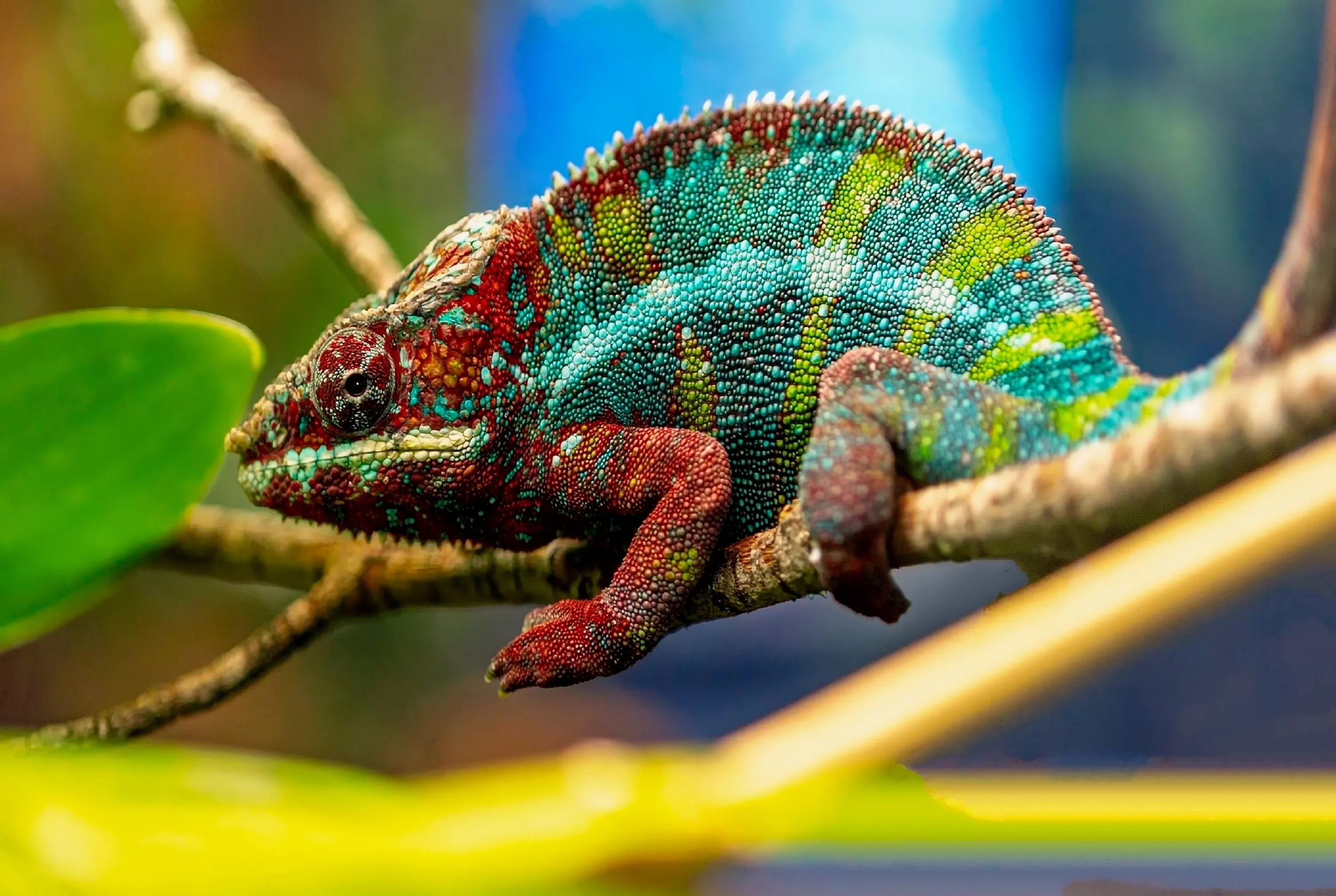
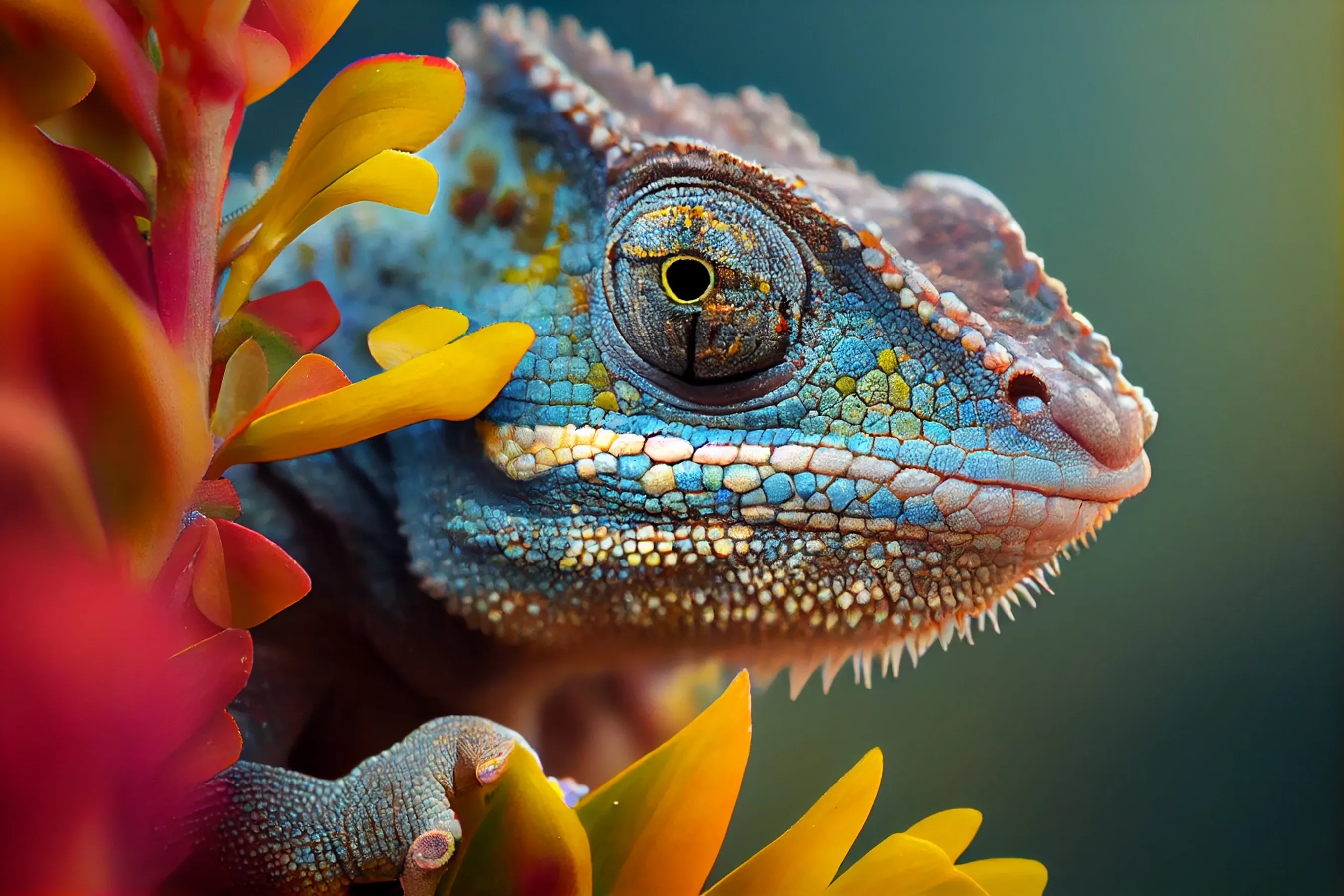
Why and how do chameleons change colour?
Chameleons change colour for several reasons. It is true that they use their unique shade-shifting ability for camouflage to some degree. However, this is not the not the primary reason they change colour - two more powerful motivators drive the process. For example, they change colour to regulate their body temperature.
Dark colours absorb more heat; therefore, chameleons turn darker when cold and lighter when warm. Moreover, they change hues to communicate with other chameleons. Males use bright colours and patterns to warn off rival males, while females display similar shades when confronted with unwelcome suitors. Perhaps the most fascinating aspect of chameleons is their ability to change colour.
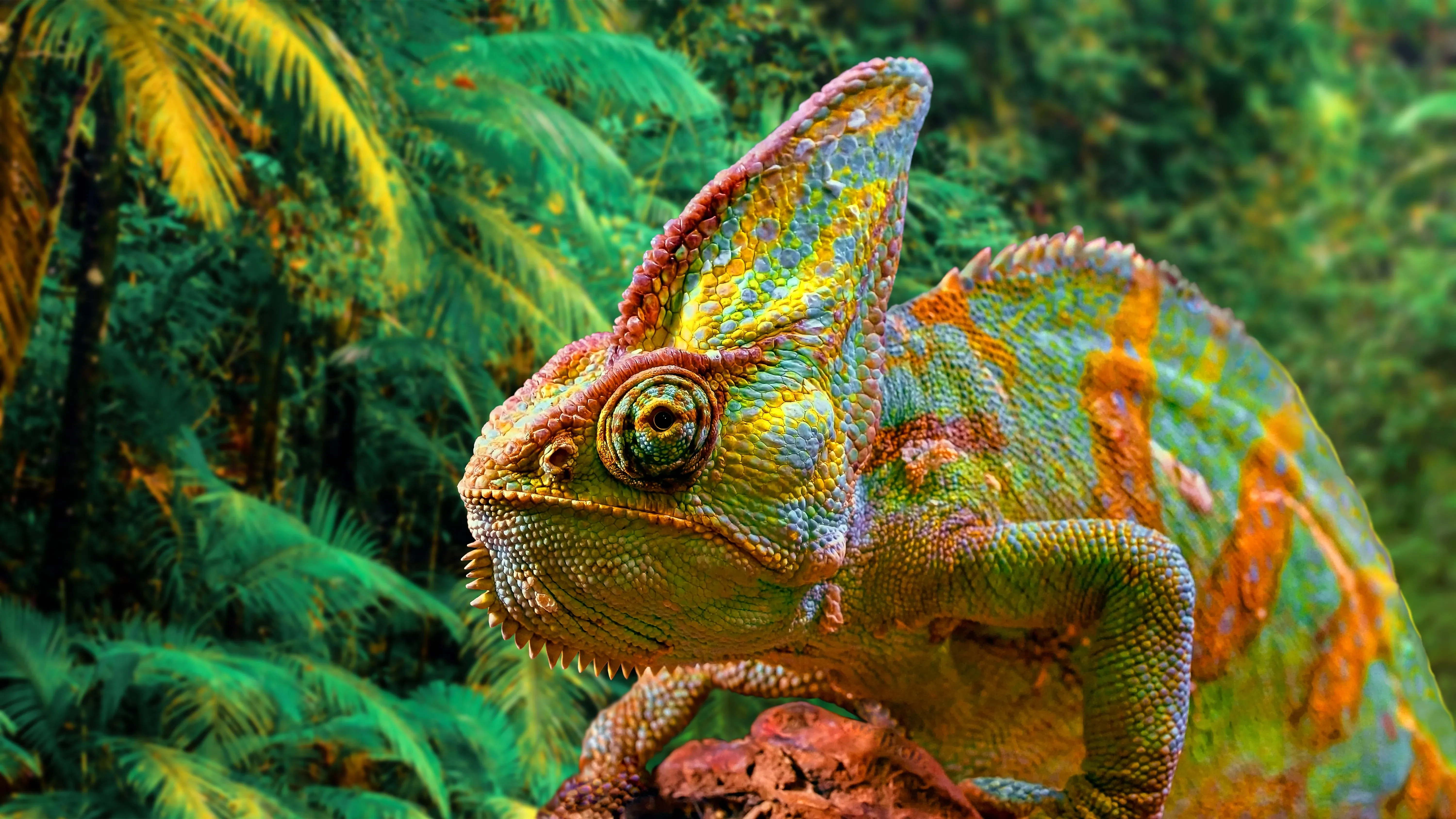
The lizards are able to do so because of a combination of unique cells located in various layers of their skin. The upper cells contain pigments, while those below contain tiny crystals called nanocrystals. These crystals move closer together or further apart as the cells contract or enlarge. This affects the length of the light waves that reflect off the pigments above, which changes the skin colour.
For example, when chameleons are relaxed, the crystals are packed closely together so that the skin reflects short light waves, i.e., predominantly blue light. The blue light bounces off the yellow pigment in the skin cells above so that, in most cases, the skin appears mainly green. However, if chameleons are stressed or excited - particularly during mating season - the crystals move apart. Consequently, they produce longer light wavelengths, i.e. red, orange, or yellow light. This allows the animals to display more striking shades that signal aggression or courtship.
What do chameleons eat?
Chameleons feed primarily on insects of all kinds, as well as worms. However, the larger species sometimes eat rodents or small birds. These unique lizards have several evolutionary advantages that help them capture prey.
Firstly, chameleons can shoot their long, sticky tongues out their mouths at lightning speed to catch food. The secret behind these oral weapons of mass destruction is that chameleons’ tongues combine muscle, bone, and elastic tissue. When chameleons set their sights on a prey object, they retract the elastic elements of the tongue tautly. This sets up a ‘bow and arrow’ effect, similar to pulling back an arrow against the elastic of a bow.
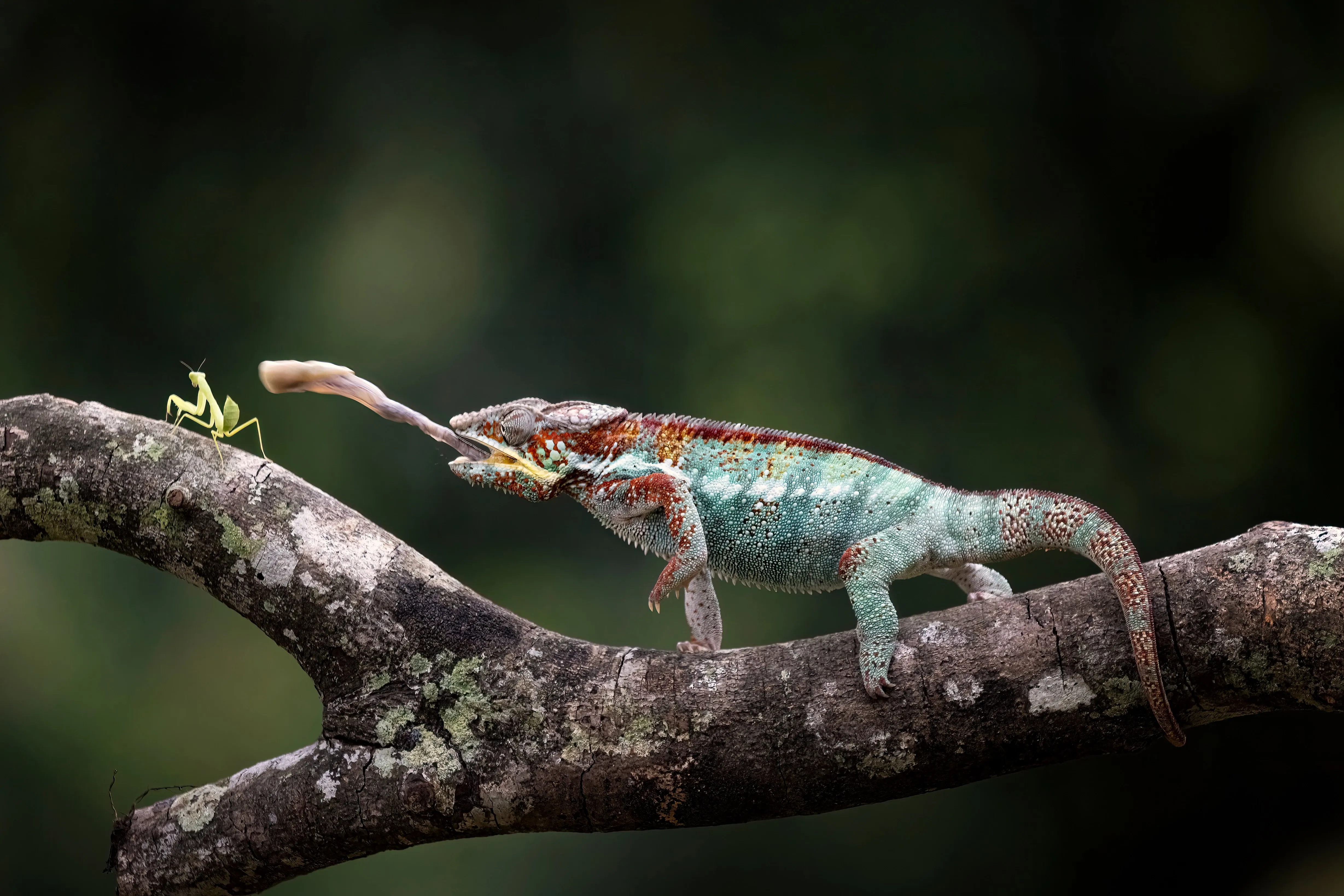
The recoil of these elastic elements allows chameleons’ tongues to shoot out at speeds of around 20 kilometres per hour. In fact, research has shown that some chameleons can devour four flies in as little as three seconds. Furthermore, they can project their tongues up to twice their body length, meaning they can keep a stealthy distance from prey before attacking.
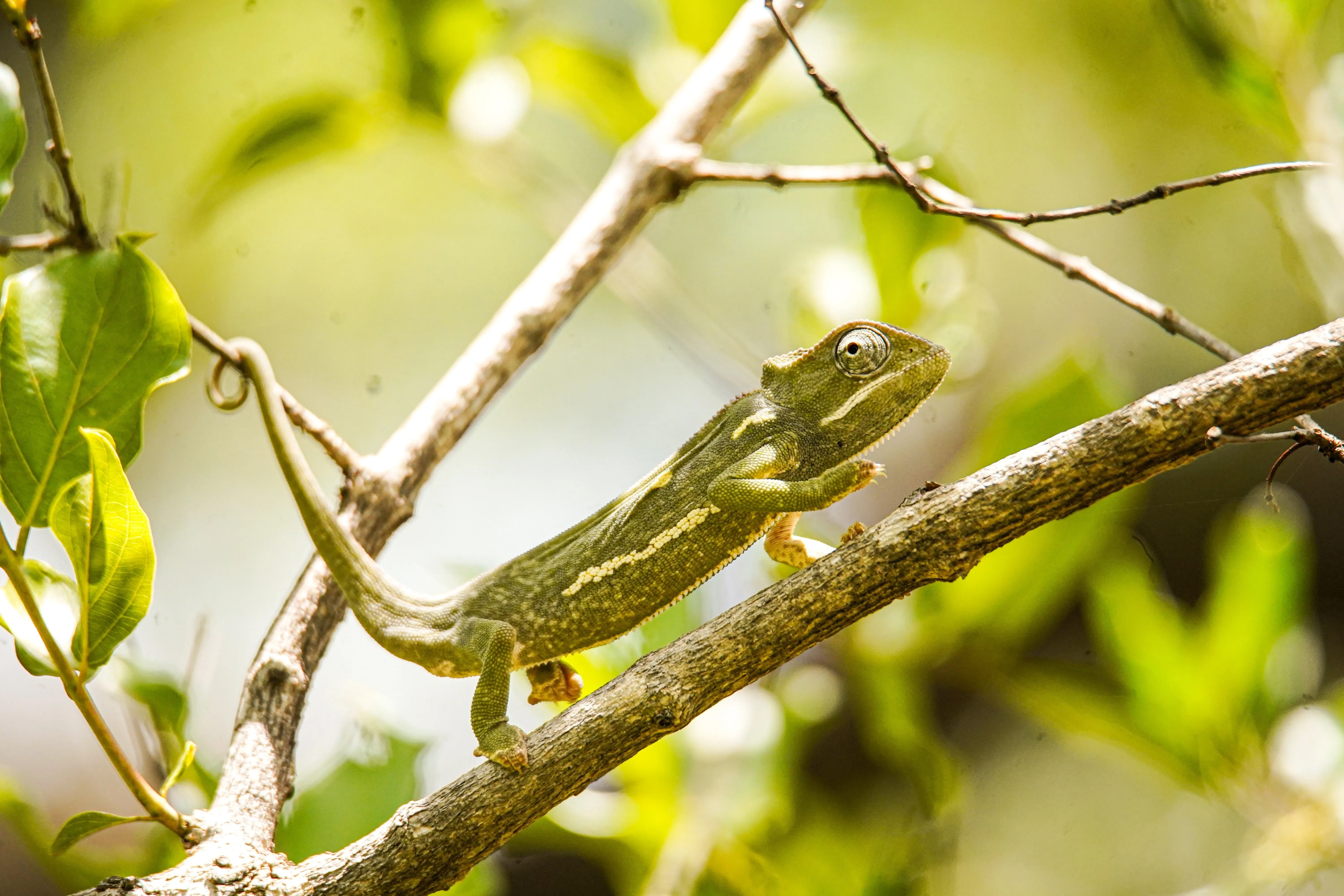
Secondly, chameleons have rotating eyes that they can move 360 degrees individually. This allows them to keep a close eye on prey, while watching for predators at the same time. And finally, their masterful camouflage skills help them to get within close range of food sources without being noticed.
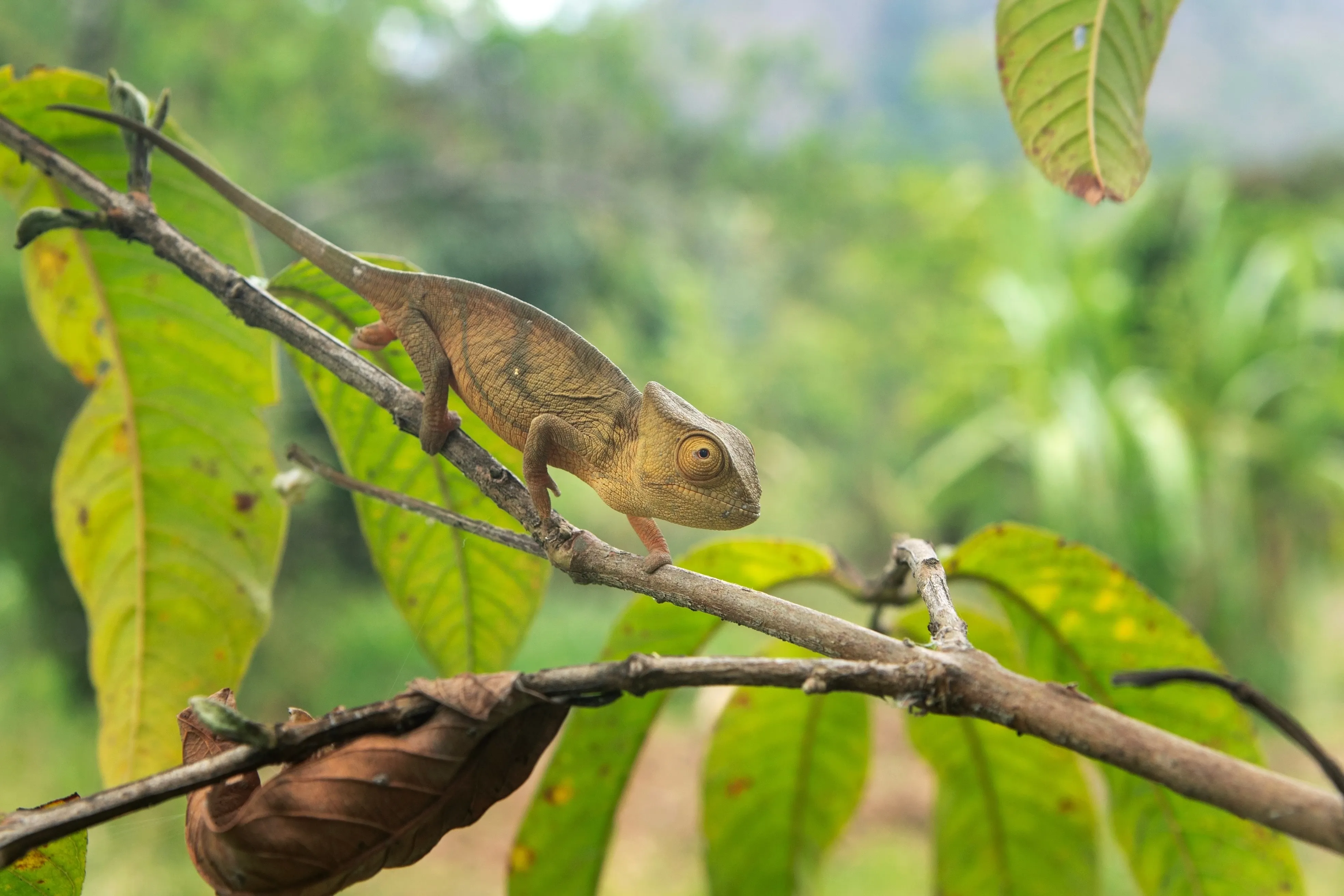
»The smallest chameleon species, Brookesia micra, can comfortably fit on the head of a match.«
Where in the world will you find chameleons?
Researchers have identified just over 200 species of chameleons worldwide. Madagascar is home to almost half of these species. Most other species occur in sub-Saharan Africa, although two live in Asia and one in India and Sri Lanka. The European or common chameleon is found from the Middle East to southern Spain and is the only species that occurs naturally in Europe.
How long do chameleons live?
The life span varies from species to species, with some chameleons living for only a few months while others can survive for years. The Madagascan chameleon F. labordi, has the shortest life span. Their eggs hatch in November, and the youngsters grow very fast, maturing into adults in approximately two months. After mating, these new adults lay eggs in February, after which the entire adult population dies. The process takes a total of four months or less.
However, most chameleons live for at least two years, with some species reaching a maximum age of around 10. The typical life cycle involves the female chameleon leaving the branches of the trees she inhabits to bury two to 40 eggs in the soil or a rotting log. The incubation period is about three months, although some species have incubation periods of 12 months or more. After the incubation period, the young, fully formed chameleon emerges from its shell. Some species, like Jackson’s Chameleon (C. jacksonii), carry their young internally and have live births.
Other interesting facts about chameleons
- Chameleons often move in a slow, swaying gait to imitate leaves or branches blowing in the wind.
- Male chameleons sometimes have two or three horn-like protrusions on their heads; however, females do not.
- Chameleons can see ultraviolet light, and ultraviolet light helps these reptiles to maintain health in captivity.
- The crystals that facilitate chameleons’ colour changes are called nucleotide guanine crystals.
- Panther chameleons display some of the most vivid colours of all chameleons, making them one of the most sought-after chameleons in the pet trade.
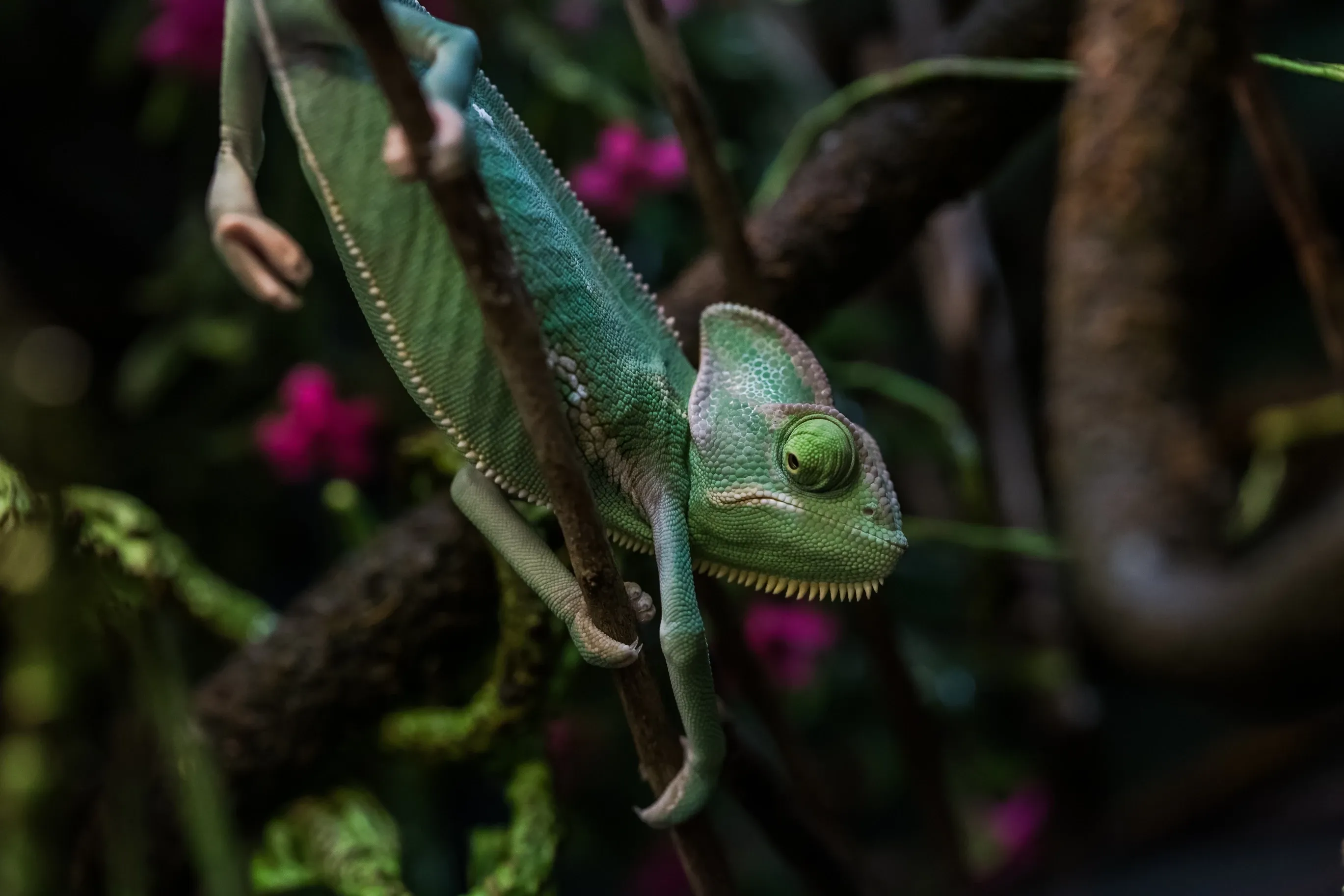
- Veiled chameleons live in the arid deserts of Saudi Arabia and Yemen. These lizards get their name from the bony protrusion that grows from their head, growing larger over time. This physical adaptation channels much-needed water droplets directly into the reptile’s mouth.

The importance of Conscious Travel
Conscious travel means exploring the world responsibly—preserving nature, respecting cultures, and ensuring future generations can experience its beauty.

Panthera Africa: An ethical sanctuary raising awareness about the big cat trade
Visit Panthera Africa, a sanctuary committed to ethical wildlife tourism, where you can support the fight against the big cat trade and protect these majestic creatures.
Mindful travel in the Amazon Rainforest
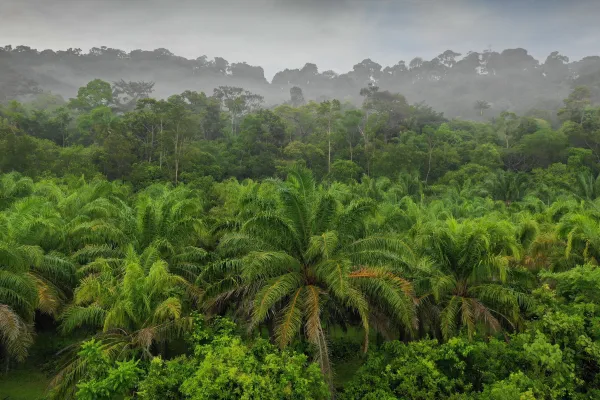
Mindful travel in the Amazon Rainforest will involve connecting with your senses, exploring biodiversity, connecting with indigenous cultures and contributing to forest conservation.

Top spots for stargazing in Southern Africa
Southern Africa's lack of light pollution make for the perfect setting to explore the cosmos, accompanied by the soundtrack of the African night. Find out more about stargazing.
The role of seagrass meadows in coastal protection
Seagrass plays an essential role in the marine ecosystem: It provides marine habitat, assimilates carbon, and purifies large quantities of water relevant for coastal protection.
A journey into mountain gorilla tourism
The reintroduction of wild gorillas was risky and remains controversial. Since conservationists have shifted the focus to tourism, the mountain gorillas are slowly recovering.
Sign up for the newsletter
By clicking on “Subscribe now” I will subscribe to the Conscious Explorer newsletter with all the information about mindful travel. Information on the success measurement included in the consent, the use of the shipping service provider MailChimp, logging of the registration and your rights of revocation can be found in our privacy policy.